
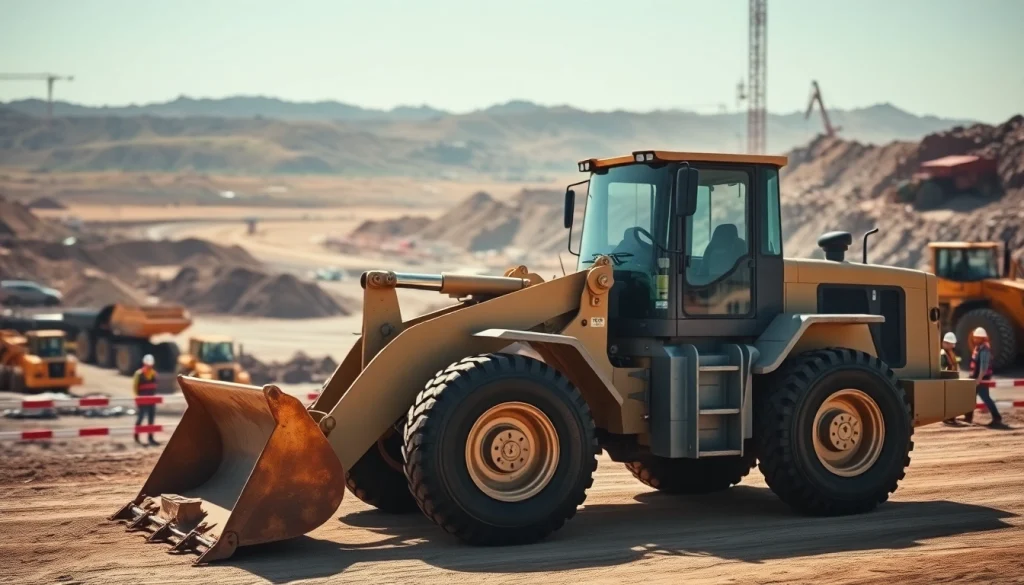
Understanding Wheel Loaders
What Are Wheel Loaders?
Wheel loaders are versatile heavy equipment machines primarily used in construction, mining, and agriculture. Distinguished by their front-mounted bucket and powerful wheels, they facilitate the movement and loading of materials like soil, gravel, and rocks. Employing hydraulic systems, these machines can lift heavy loads and deliver optimal performance in various terrains. Their design not only enhances material handling efficiency but also streamlines operations on construction sites, making them indispensable in many industries.
Key Features of Wheel Loaders
Modern wheel loaders come equipped with an array of features that elevate their performance and usability:
- Bucket Types: Depending on the project demands, wheel loaders are available with different bucket types, including general-purpose buckets, trenching buckets, and light material buckets.
- Hydraulic Systems: Advanced hydraulic systems allow for quick lifting and tilting of the bucket, ensuring efficient loading operations.
- Operator Comfort: Ergonomically designed cabins with climate control systems improve operator comfort and productivity.
- Technology Integration: Many machines integrate technology such as telematics for monitoring performance and diagnostic tools for troubleshooting.
- Four-Wheel Drive: Enhances maneuverability across challenging terrains, making them suitable for a variety of construction sites.
Types of Wheel Loaders
Wheel loaders come in various configurations to suit different applications. Here are some common types:
- Small Wheel Loaders: Ideal for light-duty tasks and tight spaces. They focus on agility and are frequently used in landscaping or small-scale construction projects.
- Medium Wheel Loaders: A balance of power and size, they are versatile for a mid-range variety of applications, such as municipal work, agriculture, and various construction tasks.
- Large Wheel Loaders: Designed for heavy-duty tasks on large construction sites or mining operations, these loaders can handle significant volumes of material with efficiency.
- Compact Wheel Loaders: Often used for urban job sites, they combine the features of conventional wheel loaders with compact design for enhanced maneuverability.
Benefits of Renting Wheel Loaders
Cost-Effectiveness of Rentals
Renting wheel loaders can lead to substantial cost savings, especially for businesses that may not require frequent use of this equipment. Purchasing heavy machinery comes with high acquisition costs, ongoing maintenance expenses, and depreciation. By choosing to Rent wheel loaders, companies only pay for the equipment when they need it, avoiding large upfront investments and redirecting funds toward other business-critical areas.
Flexibility in Project Scope
Renting wheel loaders provides unparalleled flexibility for businesses. Project scopes can change due to various factors, such as client demands or budget adjustments. With rentals, companies can quickly scale up or down their equipment needs without the restraints associated with ownership, allowing them to adapt to changing project requirements seamlessly.
Access to the Latest Technology
The construction industry is continually evolving, with new technologies enhancing efficiency and productivity. Renting wheel loaders allows companies to access the latest models equipped with advanced features, such as eco-friendly engines, enhanced hydraulic systems, and telematics. These advancements can give businesses a competitive edge by assuring they are using the most efficient equipment available.
How to Choose the Right Wheel Loader
Assessing Project Requirements
Before selecting the correct wheel loader for a project, it’s crucial to assess the specific requirements. Factors such as the types of materials to be moved, the volume of loads, and site conditions must be considered. A thorough analysis of these factors enables businesses to select a loader that meets their needs efficiently without under or over-specifying the required equipment.
Evaluating Loader Specifications
Understanding the specifications of available wheel loaders is imperative for efficient selection. Key specifications to consider include:
- Bucket Capacity: The volume of the bucket should match the scale of the project to ensure efficiency.
- Operating Weight: Heavier loaders usually provide better stability and lifting power.
- Engine Power: Engine specifications impact the loader’s efficiency, speed, and overall capability to handle tasks.
- Transmission Type: Different types of transmissions can affect the loader’s performance and maneuverability.
Considering Rental Terms and Conditions
Understanding rental terms and conditions is essential for a smooth renting experience. Key factors to investigate include:
- Rental Duration: Ensure the rental agreement aligns with your project timeline, including options for extensions.
- Maintenance Responsibilities: Determine who is responsible for maintenance and repairs to avoid unexpected costs.
- Delivery and Pickup: Confirm the logistics regarding the delivery and pickup of equipment to ensure there are no delays.
Best Practices for Renting Wheel Loaders
Preparing for Equipment Delivery
Letting time pass while waiting for equipment can hinder productivity. To avoid delays, preparation is key:
- Designate a clear delivery area on-site for the loader.
- Ensure that ground conditions and accessibility are suitable for the loader’s size.
- Have a site plan ready for the operator to navigate effectively.
Maximizing Loader Efficiency on-site
To maximize efficiency during operations, consider the following strategies:
- Provide comprehensive training for all operators to familiarize them with specific loader features and their optimal use.
- Implement regular breaks for the operators to sustain productivity and minimize fatigue.
- Monitor and assess loading patterns to avoid unnecessary movements and downtime.
Managing Safety Protocols
Prioritizing safety is critical when operating heavy machinery. Here are key considerations:
- Conduct a pre-operation inspection of the equipment to ensure it’s in safe working condition.
- Ensure all operators wear appropriate safety gear and adhere to safety protocols on-site.
- Keep the work area clear of unnecessary personnel to minimize accidents.
FAQs About Renting Wheel Loaders
What should I consider when renting wheel loaders?
Focus on your project needs, budget, and desired equipment specifications to ensure the best fit for your tasks.
How long can I rent wheel loaders?
Rental durations can vary; common options range from daily to monthly agreements, allowing flexibility in usage based on project demands.
Are there maintenance considerations for rented wheel loaders?
Typically, the rental company handles maintenance, but confirm terms beforehand to avoid unexpected liabilities.
Can I rent additional attachments for wheel loaders?
Many rental services offer attachments; inquire about available options during the rental process to maximize the loader’s utility.
How does renting compare to purchasing wheel loaders?
Renting provides flexibility and lower upfront costs, making it ideal for short-term projects or fluctuating equipment demands.