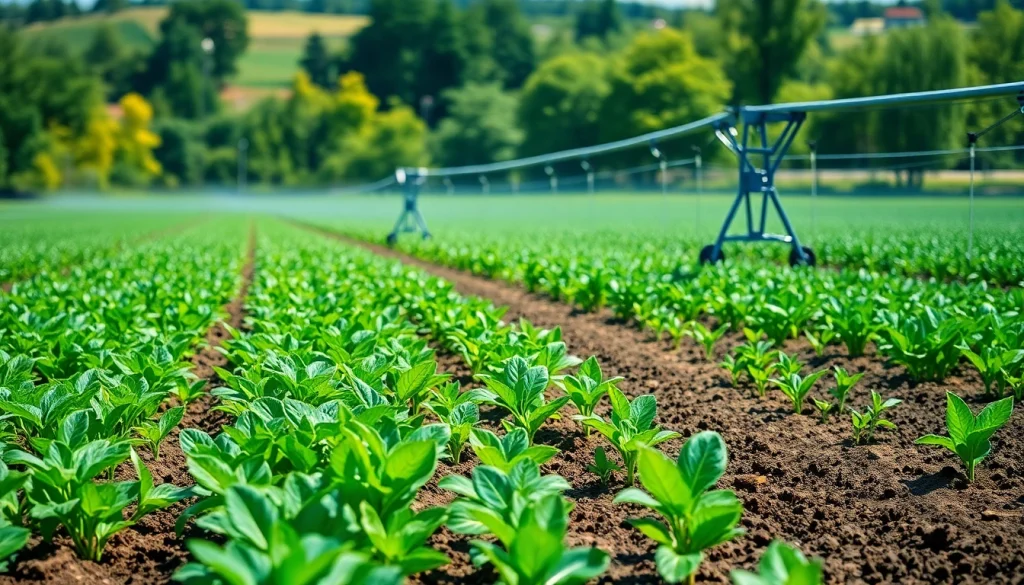
Understanding Land Irrigation Basics
Land irrigation is an integral part of agriculture that ensures crops receive adequate water for growth. This practice has evolved over the centuries, adapting to diverse climatic conditions and technological advancements. Understanding the fundamentals of land irrigation allows farmers and agricultural professionals to implement effective strategies that enhance productivity and sustainability. For more insights on land irrigation, delve into the key components of this vital agricultural method.
What is Land Irrigation?
Land irrigation is the process of applying controlled amounts of water to crops at necessary intervals. This technique is essential in areas where rainfall is insufficient or irregular, helping to ensure a reliable water supply for agricultural activities. There are various methods of land irrigation, and the choice of method often depends on the specific conditions of the land, the crops being cultivated, and available resources.
Importance of Land Irrigation in Agriculture
The importance of land irrigation in agriculture cannot be overstated. Proper irrigation supports agricultural sustainability by maximizing crop yield and quality, particularly in arid and semi-arid regions. Notably, effective irrigation systems contribute to stabilizing food supplies, fostering economic development, and enhancing farmers’ livelihoods. Water management practices can lead to better nutrient uptake by crops, improving overall productivity.
Types of Land Irrigation Systems
There are several types of land irrigation systems, each with unique advantages and disadvantages:
- Surface Irrigation: Water is applied directly to the soil surface and allowed to flow across the field. It’s simple and cost-effective but can be less efficient due to evaporation and runoff.
- Drip Irrigation: A highly efficient method that delivers water directly to the root zone of plants through a network of tubing. This minimizes waste and conserves water.
- Sprinkler Irrigation: Mimics natural rainfall by spraying water over crops. It’s flexible and can be used for various crops but may require a more significant investment in technology.
- Subsurface Irrigation: Delivers water below the soil surface, which reduces evaporation. This method is often used for high-value crops.
- Flood Irrigation: Involves flooding the entire field with water. While it can be effective for certain crops, it can also lead to waterlogging and drainage issues if not carefully managed.
Common Challenges in Land Irrigation
Pest Management Issues
One of the significant challenges faced in land irrigation is managing pests and diseases. Excess moisture can create a conducive environment for pests, leading to infestations that threaten crop health. Effective pest management strategies, including the use of integrated pest management (IPM) practices, can help mitigate these risks. Farmers must remain vigilant and adapt their practices based on observed pest activity.
Water Scarcity and Quality Concerns
Water scarcity is an ever-growing concern in many regions, exacerbated by climate change and population growth. Inadequate water supply can hamper irrigation efforts, while poor water quality can adversely affect plant health. Implementing water conservation techniques and using water quality testing can help address these challenges. Farmers must continuously seek innovative methods to utilize water efficiently while ensuring its quality.
Soil Erosion and Fertility Degradation
Soil erosion and fertility degradation pose significant threats to sustainable irrigation practices. Excessive irrigation can lead to soil erosion, while inadequate nutrient management can degrade soil quality. Practices such as crop rotation, cover cropping, and organic amendments can help maintain soil health and fertility. Additionally, the use of erosion control structures may aid in preserving valuable topsoil.
Best Practices for Effective Land Irrigation
Choosing the Right Irrigation Method
Selecting the appropriate irrigation method is crucial for optimizing water use and maximizing crop yield. Factors to consider include the type of crops, soil characteristics, climate conditions, and economic feasibility. Farmers should evaluate the benefits and limitations of different irrigation systems against their specific circumstances to make informed decisions.
Implementing Efficient Water Management
Effective water management is essential for maintaining sustainability in agriculture. Techniques such as scheduling irrigation based on evapotranspiration rates, utilizing moisture sensors, and adopting rainwater harvesting can significantly enhance water use efficiency. Implementing such practices not only conserves water but also minimizes operational costs.
Monitoring Soil and Crop Health
Regular monitoring of soil moisture levels, nutrient availability, and crop health can greatly improve irrigation outcomes. Utilizing soil moisture sensors and crop health assessment technologies can provide real-time data that guide irrigation decisions. This proactive approach aids in identifying potential problems early and enables farmers to take corrective actions swiftly.
Case Studies of Successful Land Irrigation Implementations
Innovative Techniques from Leading Farmers
Several farmers worldwide have successfully adopted innovative land irrigation techniques. For instance, farmers in arid regions employ solar-powered drip irrigation systems to maximize efficiency while minimizing environmental impact. Such techniques highlight the potential for pioneering irrigation practices to facilitate sustainable agriculture.
Community-Based Irrigation Projects
Community-based irrigation initiatives have shown promising results in enhancing agricultural productivity. These programs often involve shared resources and collaborative efforts among farmers to manage water distribution effectively. By pooling resources, communities can implement larger irrigation projects that benefit collective agricultural output while conserving water.
Technology-Driven Irrigation Solutions
Technological advancements play a vital role in enhancing land irrigation practices. From the adoption of automated irrigation systems to the integration of data analytics for monitoring and management, technology-driven solutions are at the forefront of modern agriculture. Innovations such as smart irrigation controllers and mobile applications empower farmers to optimize water usage and improve crop yields.
Future Trends in Land Irrigation
Smart Irrigation Technologies
The future of land irrigation is leaning toward smart technologies that facilitate precision agriculture. These advancements include automated systems that adjust irrigation schedules based on real-time weather data and crop requirements. By leveraging IoT devices and AI analytics, farmers can significantly improve irrigation efficiency and resource management.
Environmental Impacts and Sustainability
As agricultural practices evolve, there is an increasing focus on environmental impacts and sustainability. The integration of sustainable irrigation practices not only conserves water but also protects ecosystems. Adopting methods that minimize the use of chemical inputs and promote biodiversity will be essential for sustaining agricultural productivity in the long term.
Policy and Research Advancements
Research advancements and supportive policy frameworks are critical for promoting effective land irrigation practices. Government initiatives that encourage sustainable water management, alongside investment in irrigation infrastructure and community education, can bolster agricultural resilience. Continuous research into innovative irrigation solutions will pave the way for improved practices in a rapidly changing climate.
FAQs About Land Irrigation
What is the main purpose of land irrigation?
The main purpose of land irrigation is to supply crops with the necessary water to support growth, ultimately improving crop yield and agricultural productivity.
How can water scarcity affect irrigation?
Water scarcity can limit the availability of water resources for irrigation, hindering crop growth and potentially leading to reduced agricultural output.
What are the most efficient irrigation methods?
Drip and subsurface irrigation are considered among the most efficient methods, as they deliver water directly to the root zone and minimize evaporation loss.
How does soil health impact irrigation practices?
Healthy soil enhances the efficiency of irrigation by improving water retention and nutrient availability, directly contributing to better crop growth.
What role does technology play in modern irrigation?
Technology in irrigation includes automated systems, sensors, and data analytics, which help optimize water use, improve management, and enhance crop yields.