
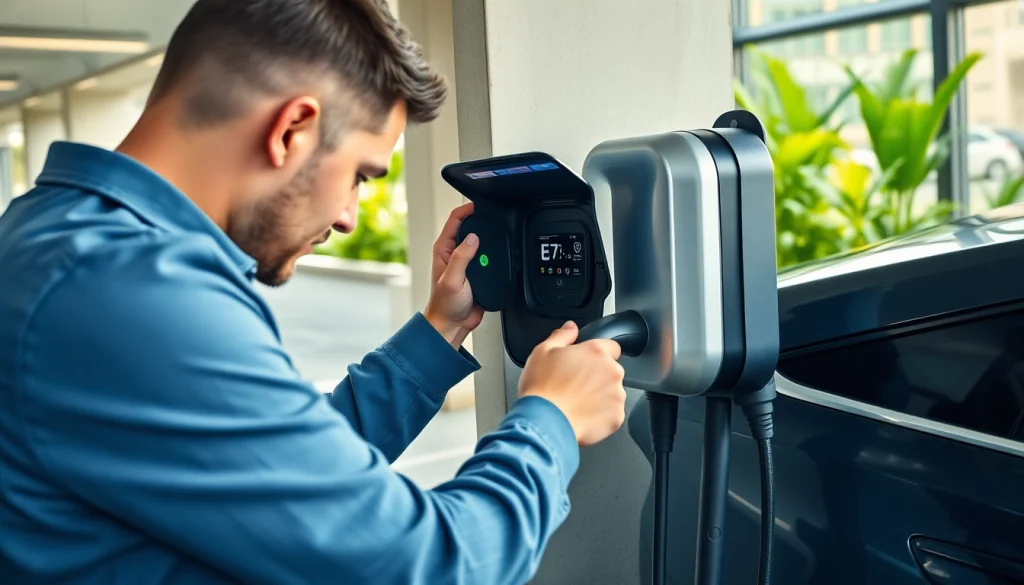
Understanding EV Charging Installation
What is EV Charging Installation?
EV Charging Installation refers to the process of setting up infrastructure that allows electric vehicles (EVs) to recharge their batteries. This installation can occur in a variety of settings, from residential garages to commercial parking lots. In recent years, the surge in electric vehicle adoption has underscored the importance of accessible charging options. Proper installation guarantees that not only are vehicles charged efficiently, but also that safety measures are strictly adhered to. For those looking to implement EV Charging Installation, understanding the specifics of this process is crucial to ensuring functionality and safety.
Types of EV Chargers Available
There are three primary types of EV chargers: Level 1, Level 2, and DC Fast Chargers.
- Level 1 Chargers: These utilize a standard 120V outlet and are the slowest option, delivering approximately 4-5 miles of range per hour of charging. They are commonly used in homes where charging needs are minimal and the vehicle can be plugged in overnight.
- Level 2 Chargers: Operating on a 240V outlet, these chargers are widely preferred for both residential and commercial applications. They can deliver around 25-30 miles of range per hour, making them efficient for daily use and ideal for commercial fleets.
- DC Fast Chargers: These high-powered chargers can charge a vehicle to 80% capacity in around 30 minutes, making them suitable for public charging stations and long-distance travel. However, they are more expensive and require substantial electrical infrastructure.
Benefits of Professional Installation
Opting for professional installation comes with numerous advantages, including:
- Safety: Certified professionals understand the technical requirements and local codes, reducing risks associated with improper installation.
- Efficiency: Professionals ensure the optimal location and installation practices, enhancing charging efficiency.
- Warranty and Support: Installation by certified technicians often comes with warranties, providing peace of mind and assistance for troubleshooting.
Preparing for EV Charging Installation
Assessing Your Charging Needs
Before proceeding with EV Charging Installation, it is essential to assess your specific charging requirements. Consider the number of electric vehicles you own, their average daily mileage, and the type of charger that aligns with your lifestyle. For businesses, evaluate the number of employees with EVs and the expected charging volume during business hours.
Choosing the Right Location for Installation
The location for installation is critical. Factors to consider include accessibility, proximity to power sources, and safety regulations. For residential installations, the garage or driveway tends to be ideal. For commercial installations, consider the flow of traffic, ease of use for customers, and proximity to amenities.
Permits and Regulations to Consider
Given the electrical and potential structural alterations involved in EV Charging Installation, obtaining the necessary permits is crucial. Local regulations may require inspections to ensure compliance with safety standards. Working with professionals who are familiar with local codes can streamline this process significantly.
Step-by-Step EV Charging Installation Guide
Gathering Necessary Tools and Materials
Preparing the right tools and materials is essential for a successful installation. Basic tools required may include screwdrivers, pliers, wire strippers, and a multimeter for ensuring proper electrical connections. You will also need appropriate electrical components, such as circuit breakers, conduit, and wiring based on the charger specifications.
Installing the EV Charger
Follow these steps for proper installation:
- Shut off electric power to the installation area.
- Mount the charging unit at a height that is easily accessible.
- Run electrical conduit from the main panel to the charging location.
- Connect the wiring according to the manufacturer’s specifications.
- Secure the charger and restore power, ensuring all connections are secure and the system functions properly.
Connecting to Power Sources Safely
Ensuring a safe connection to power sources requires adherence to various electrical codes and standards. It is advisable to use a dedicated circuit that is large enough to handle the charger’s power requirements. Engaging a licensed electrician for this task can simplify code compliance and enhance safety.
Common Challenges in EV Charging Installation
Addressing Electrical Capacity Issues
Many properties may not have the electrical capacity to support the demands of an EV charger. Upgrading your electrical panel or wiring may be necessary, which could involve significant cost and time. Always perform a load assessment to identify capacity and plan for potential upgrades.
Dealing with Space Constraints
Space constraints can pose challenges, especially in urban environments. It is vital to strategize the installation location, perhaps considering wall-mounted units or spatial planning to maximize the available area while ensuring compliance with local regulations regarding clear space.
Resolving Connectivity and Software Challenges
Some EV chargers require a wired or wireless connection to operate software updates or network integrations for smart features. Verify your home’s or business’s internet capacity and check compatibility with the charger to prevent connectivity issues post-installation.
Maintenance and Best Practices After Installation
Regular Inspection and Upkeep
Once your EV charger is installed, regular inspections are essential. Check for wear and tear on cables, ensure that contact points are clean, and look for any ice or debris that may affect functionality during inclement weather. Regular maintenance can prevent costly repairs down the road.
Optimizing Charging Times for Efficiency
To maximize the efficiency of your EV charging, utilize smart scheduling features if available. Many modern chargers allow you to charge your vehicle during off-peak hours, which can save on energy costs and reduce strain on local electricity grids.
Understanding Warranty and Service Options
Ensure you understand the warranty terms for both your EV and the charger. Familiarize yourself with service options and what is covered under warranty. This knowledge is crucial for knowing whom to contact for service and maintenance needs in the future.
Frequently Asked Questions
1. What is the average cost of EV Charging Installation?
The average cost varies based on location, type of charger, and electrical upgrades needed. Expect to budget between £500 to £1,500 for installation.
2. How long does EV Charging Installation typically take?
Installation usually takes several hours to a full day, depending on the complexity of the site and required electrical work.
3. Can I install my EV charger myself?
While some may attempt DIY installations, it is highly recommended to hire a professional to ensure safety and code compliance.
4. Do I need a special permit for EV Charging Installation?
Yes, most regions require permits for electrical modifications, which a licensed electrician can help to secure.
5. Will my electricity bill increase with EV Charging Installation?
Charging an EV will increase your electricity usage, but the exact impact on your electricity bill will depend on your charging habits and local energy costs.