
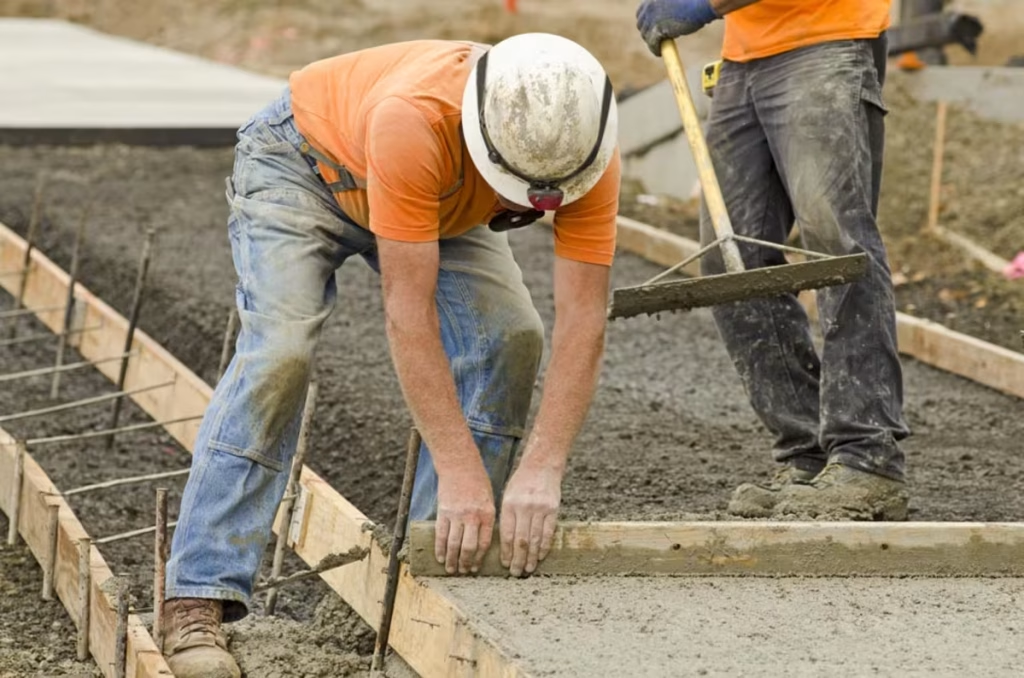
Industrial and commercial facilities rely heavily on durable flooring to support operations, heavy machinery, and high traffic. Over time, even the best Commercial Concrete floors can suffer from wear, cracking, spalling, or surface degradation. When addressing these issues, facility owners often face a critical decision: repair or replace the concrete floor. At Randahl Construction, we specialize in evaluating, repairing, and replacing commercial concrete floors, ensuring long-term durability and operational efficiency. This article explores the factors to consider when choosing between repair and replacement and highlights the best practices for maintaining strong, reliable concrete floors.
- Understanding Commercial Concrete Floor Issues
- Factors to Consider When Deciding to Repair or Replace
- Repair Techniques for Commercial Concrete Floors
- When Replacement Is the Best Option
- Best Practices for Commercial Concrete Floor Replacement
- Advantages of Expert Commercial Concrete Repairs and Replacement
- Why Randahl Construction Is Your Partner for Commercial Concrete Floors
- Conclusion
Understanding Commercial Concrete Floor Issues
Common Problems in Industrial Floors
Commercial concrete floors in industrial facilities can experience a range of issues, including:
- Surface cracks from shrinkage or heavy loads
- Spalling caused by freeze-thaw cycles or chemical exposure
- Uneven surfaces due to settlement or improper installation
- Structural deterioration from worn reinforcement or prolonged stress
Understanding the nature and extent of these problems is essential before deciding on repair or replacement. High-quality commercial concrete initially installed can extend the lifespan, but proper maintenance and timely intervention are crucial.
Impact on Operations
Damaged floors can compromise safety, reduce productivity, and create challenges for machinery alignment. Choosing the right approach—repair or replacement—ensures minimal disruption and protects long-term facility performance.
Factors to Consider When Deciding to Repair or Replace
Extent of Damage
Minor surface cracks, spalling, or localized wear can often be repaired using patching, overlay, or resurfacing techniques. Extensive structural damage, large-scale cracking, or deteriorated subgrade may require full commercial concrete floor replacement.
Age of the Floor
Older floors may have cumulative wear and outdated reinforcement standards. If the floor is nearing the end of its expected service life, replacement may be more cost-effective than ongoing repairs.
Load-Bearing Requirements
Industrial floors must withstand heavy machinery and operational loads. Repairs can restore surface integrity but may not fully restore load-bearing capacity if the underlying concrete is compromised. Replacement ensures consistent strength throughout the slab.
Budget and Timeline
Repairing floors is typically faster and less expensive than full replacement. However, frequent repairs can add costs over time. Replacing commercial concrete floors may require higher upfront investment but provides long-term reliability and reduced maintenance costs.
Operational Disruption
Repair work often allows partial access to industrial areas, minimizing downtime. Replacement may require more extensive preparation and curing time, temporarily impacting operations. Advanced planning and accelerated curing methods can help mitigate downtime.
Repair Techniques for Commercial Concrete Floors
Patching and Resurfacing
Small cracks, spalls, and surface imperfections can be addressed with patching compounds or concrete overlays. Proper preparation, cleaning, and adhesion ensure that repairs bond effectively with the existing commercial concrete.
Epoxy Injection
For structural cracks or joints, epoxy injection restores strength by bonding fractured sections together. This technique is particularly effective for industrial floors under continuous load.
Grinding and Polishing
Surface grinding removes unevenness, minor imperfections, and worn layers, while polishing provides a smooth, durable finish suitable for high-traffic areas.
Reinforcement Enhancement
In some cases, fiber reinforcement or steel mesh can be added to repaired areas to enhance tensile strength and prevent future cracking in commercial concrete floors.
When Replacement Is the Best Option
Extensive Structural Damage
If cracks, spalling, or subgrade issues are widespread, repairing may only offer a temporary solution. Full replacement ensures a uniform, durable, and load-bearing commercial concrete surface.
Compliance with Modern Standards
Older floors may not meet current industry standards for thickness, reinforcement, or chemical resistance. Replacement allows facilities to upgrade to modern, high-performance commercial concrete that meets current operational demands.
Long-Term Cost Efficiency
While replacement requires higher initial investment, it eliminates recurring repair costs and reduces downtime, offering greater long-term value and improved operational reliability.
Best Practices for Commercial Concrete Floor Replacement
Thorough Assessment
A detailed evaluation of the existing floor, subgrade, and reinforcement ensures accurate planning for replacement. This step helps determine slab thickness, reinforcement requirements, and appropriate concrete mix design.
Custom Mix Design
High-quality commercial concrete tailored for industrial use ensures maximum strength, durability, and resistance to wear, chemical exposure, and environmental stress.
Proper Subgrade Preparation
A well-prepared subgrade is critical for preventing settlement, cracking, and uneven surfaces. Compaction, leveling, and moisture control provide a stable foundation for new concrete.
Controlled Pouring and Finishing
Expert placement, vibration, and finishing techniques ensure a dense, uniform slab with smooth surfaces, ready to withstand heavy industrial use.
Curing and Protection
Proper curing methods, including moisture retention, temperature control, and protective coverings, guarantee that new commercial concrete reaches design strength and durability.
Advantages of Expert Commercial Concrete Repairs and Replacement
Extended Floor Lifespan
Timely repairs and professional replacement ensure that industrial floors maintain strength and integrity, supporting heavy machinery and operational demands for decades.
Safety and Compliance
Properly repaired or replaced commercial concrete floors reduce slip hazards, uneven surfaces, and structural weaknesses, ensuring compliance with safety standards and building codes.
Operational Efficiency
High-quality floors support smooth equipment operation, reduce maintenance interruptions, and minimize downtime, keeping industrial facilities productive and efficient.
Cost Savings Over Time
Investing in professional repair or replacement preserves floor integrity, reducing the frequency of costly repairs and operational disruptions associated with damaged concrete surfaces.
Why Randahl Construction Is Your Partner for Commercial Concrete Floors
Randahl Construction brings decades of experience in industrial and commercial concrete services. Our team evaluates, repairs, and replaces commercial concrete floors with precision, ensuring long-lasting performance and operational efficiency.
Our services include:
- Comprehensive floor assessment and evaluation
- Expert repair solutions including patching, overlays, and epoxy injection
- Full replacement of worn or structurally compromised floors
- Reinforcement design and installation for added durability
- Cold-weather and accelerated curing techniques
By partnering with Randahl Construction, industrial and commercial facility owners can ensure that their commercial concrete floors are safe, durable, and built to withstand the demands of modern operations.
Conclusion
Deciding whether to repair or replace commercial concrete floors depends on damage severity, age, load requirements, and long-term operational goals. Timely intervention with professional repair techniques can restore surface integrity, while full replacement provides a durable, high-performance solution for industrial facilities. Randahl Construction’s expertise guarantees that every commercial concrete floor, whether repaired or replaced, delivers strength, reliability, and long-lasting performance, ensuring safe and efficient industrial operations.