
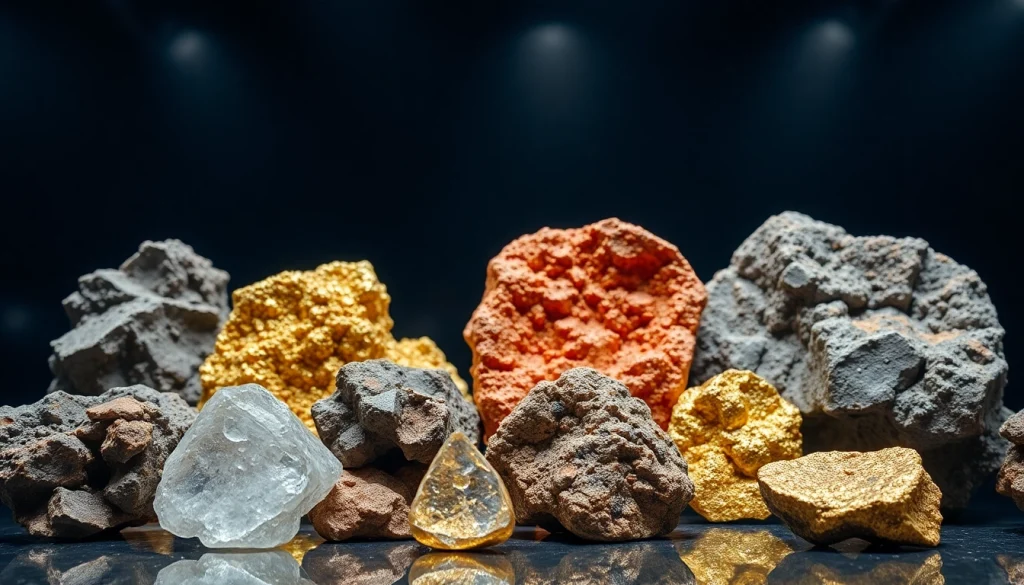
1. Introduction to Ore: What It Is and Why It Matters
The term Ore refers to natural rock or sediment that contains minerals containing valuable elements, most commonly metals, that can be economically extracted. Understanding ore is crucial, as it plays a vital role in various industries, including construction, manufacturing, and technology. This article will delve into the significance, types, extraction methods, and future trends associated with ore.
1.1 Definition of Ore
Ore is defined as a naturally occurring solid material from which a metal or valuable mineral can be extracted profitably. The concentration of these minerals must be above a certain level to make extraction financially viable. Depending on their composition, ores can yield a range of products, from metals like gold and copper to essential minerals like lithium.
1.2 Historical Significance of Ore
The historical significance of ore extends back to ancient civilizations. The use of metals extracted from ores marked major technological advancements. The Bronze Age, for instance, was characterized by the use of copper and tin ores, leading to development in tools and weapons. These innovations laid the groundwork for modern societies.
1.3 Common Uses of Ore in Industry
Various industries utilize ores for different purposes. In construction, ores like limestone and granite provide essential raw materials for building infrastructure. The technology sector relies heavily on ores such as rare earth elements for manufacturing electronics. Furthermore, steel production heavily depends on iron ore.
2. Types of Ore and Their Characteristics
2.1 Metallic Ores
Metallic ores contain valuable metals that can be extracted through mining. Common examples include iron ore, copper ore, and bauxite, the latter being a primary source for aluminum. These ores are typically mined through surface or underground methods, depending on their location and geological conditions.
2.2 Non-metallic Ores
Non-metallic ores, such as salt and gypsum, do not contain metals but are still economically valuable. Salt is essential for food preservation and chemical production, while gypsum is crucial in the drywall manufacturing industry. These ores often undergo different extraction and processing methods compared to metallic ores.
2.3 Rare Earth Ores
Rare earth ores contain elements that are critical for high-tech applications, including electronics, renewable energy technologies, and defense systems. Although they are not “rare” in geological terms, their extraction is complex and requires advanced technologies. Examples include monazite and bastnaesite, which are processed to obtain rare earth metals.
3. Mining and Processing Ore
3.1 Methods of Ore Extraction
Ore extraction methods vary widely depending on the type and location of the ore deposit. Common techniques include:
- Open-pit mining: This method involves removing large amounts of soil and rock to expose the ore, commonly used for surface deposits.
- Underground mining: Used for deeper ore deposits, this method involves creating tunnels and shafts to reach the ore.
- Placer mining: This technique extracts valuable minerals from alluvial deposits where they have accumulated by water movement.
3.2 Processing Techniques for Ore
Once ore is extracted, it undergoes several processing stages to separate valuable minerals from waste material. Common processes include:
- Crushing and grinding: Breaking down the ore into smaller pieces to liberate the minerals.
- Concentration: Techniques like flotation, magnetic separation, and leaching enhance the grade of the ore.
- Smelting: High-temperature treatment to extract metals from their ores, particularly for metallic ores.
3.3 Environmental Impact of Ore Mining
The extraction and processing of ores can result in significant environmental challenges, including habitat destruction, water pollution, and soil degradation. These impacts necessitate the implementation of sustainable practices in mining operations to mitigate harm to ecosystems and comply with regulatory frameworks aimed at protecting the environment.
4. Economic Aspects of Ore
4.1 Market Demand for Ore
The global demand for various ores is influenced by industrial growth, technological advancements, and the rise of renewable energy. For instance, increasing demand for lithium in electric vehicle batteries drives exploration and extraction, impacting global market dynamics.
4.2 Pricing Trends for Different Ores
Ore prices are subject to fluctuations based on factors such as supply and demand, geopolitical stability, and global economic conditions. Analysts often monitor trends to forecast price movements, which can substantially influence mining operations and profitability.
4.3 Role of Ore in Global Trade
Ores play a crucial role in international trade, with countries exporting and importing significant quantities to meet their industrial needs. For example, countries rich in minerals like Australia and Chile are major exporters of iron ore and copper, respectively, shaping global trade relationships.
5. Future of Ore and Sustainable Practices
5.1 Innovations in Ore Mining
The future of ore mining is increasingly leaning towards innovation and technology, focusing on reducing environmental impact and enhancing efficiency. Techniques such as automation, drones for surveying, and big data analytics for resource estimation are becoming integral parts of modern mining practices.
5.2 Sustainable Alternatives to Ore Resources
As sustainability becomes paramount, industries are exploring alternatives to traditional ore resources. Recycled metals and alternative materials can reduce reliance on newly extracted ores, contributing to a circular economy that minimizes waste and environmental footprint.
5.3 Overview of Regulatory Frameworks
Mining operations are subject to regulatory frameworks designed to protect the environment and ensure sustainable practices. Regulatory bodies often set standards for emissions, waste management, and biodiversity conservation, shaping how mining companies operate and plan their projects.
FAQs
What types of ore exist?
There are various types of ore, including metallic ores (like gold and copper), non-metallic ores (like salt and clay), and rare earth ores (like neodymium). Each has distinct properties and uses.
How is ore extracted?
Ore is typically extracted through mining techniques such as open-pit mining and underground mining. The method depends on the type of ore and its geographical location.
What are the environmental concerns regarding ore mining?
Ore mining can lead to significant environmental issues, including habitat destruction, water pollution, and soil degradation, highlighting the need for sustainable practices.
How does ore affect the economy?
Ore is essential for various industries, ranging from construction to electronics, and influences job creation and trade dynamics, contributing significantly to economic stability.
What future trends are emerging in ore mining?
Future trends include increased automation, sustainability initiatives, recycling efforts, and technological innovations that enhance efficiency and reduce environmental impact in ore mining.