
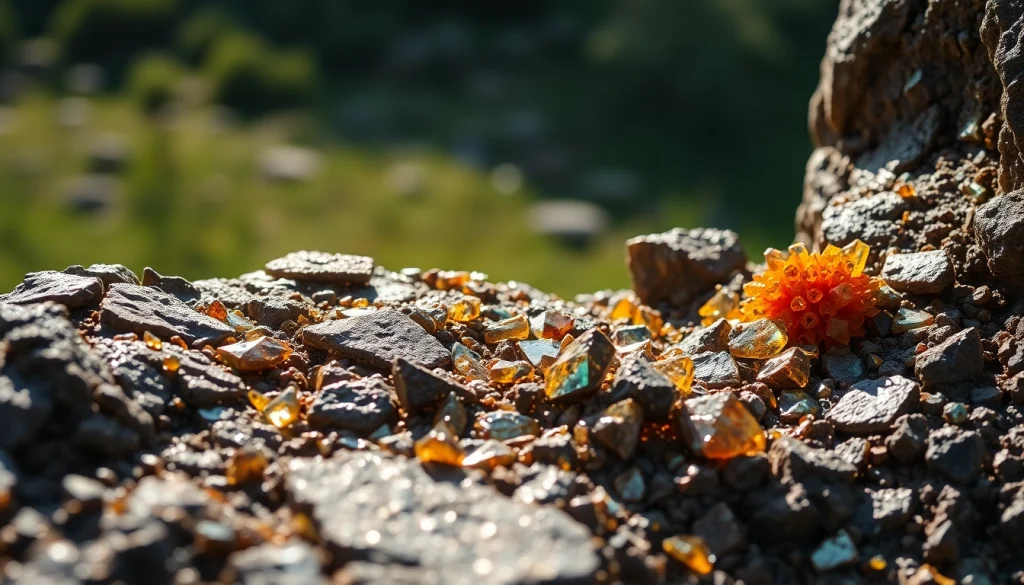
What is Ore?
Definition and Characteristics
Ore is a term that refers to a naturally occurring rock or sediment that contains one or more valuable minerals, primarily metals, in concentrations that make them economically viable for extraction. The significance of ore lies in its role as a source material for many of the materials we use in daily life, from construction to technology. The geological formation of ore typically includes various minerals that have crystallized into solid masses and, once mined, these ores undergo a series of refining processes to extract the desired metals.
Types of Ore
Ores can be classified based on their mineral content and the metals they yield. Broadly, there are two main categories: metallic and non-metallic ores.
- Metallic Ores: These include ores that yield metals upon processing. Common examples include iron ore, copper ore, gold ore, and aluminum ore. Metallic ores often have high densities and are usually mined through processes that include open-pit mining or underground mining.
- Non-Metallic Ores: These are minerals that do not primarily yield metals but are still valuable. Examples include phosphate rock, which is crucial for fertilizers, and potash, which is important for agriculture.
Economic Significance of Ore
The economic importance of ore is immense. The mining and processing of ores contribute significantly to the global economy, creating jobs, stimulating technological advancements, and providing raw materials essential for numerous industries. As nations develop, the demand for various ores increases, driving exploration and mining operations in many regions. For a deeper understanding of the ore economy, consider exploring more about Ore and its applications across different sectors.
Types of Ore Deposits
Metallic Ores
Metallic ores are classified into several types based on the metals they contain and their extraction methods. Common types include:
- Oxide Ores: Where metals are combined with oxygen. Examples include iron oxide (e.g., hematite) and copper oxide (e.g., malachite).
- Sulfide Ores: These ores contain metal sulfides and are common sources of metals like copper and lead. The extraction process often involves froth flotation followed by smelting.
- Carbonate Ores: Comprising metal carbonates, these ores are critical for metals like lead and zinc.
- Native Ores: Ores that exist in their metallic form, such as gold and silver nuggets, are considered native ores.
Non-metallic Ores
Non-metallic ores, while not yielding metals, are vital for industries that rely on specific mineral properties. Examples include:
- Building Stone: Essential for construction, examples include granite and marble.
- Industrial Minerals: Such as silica, which is used in glass manufacturing, and gypsum for wallboard.
- Fertilizer Minerals: These ores include potash and phosphate rock, which are crucial for soil enrichment.
Rare Extractive Ores
Rare extractive ores are found less frequently and often require advanced technologies for extraction and processing. Elements such as lithium and rare earth elements (REE) fall into this category. The extraction of these ores is becoming increasingly important, chiefly due to their applications in modern technologies such as batteries for electric vehicles and various electronics.
The Mining Process of Ore
Exploration Techniques
Finding new ore deposits begins with exploration techniques that include geological surveys, geochemical analysis, and geophysical surveys. These methods help identify areas where ore deposits are likely to be found. Remote sensing technology and satellite imaging have enhanced the precision of surface mapping, allowing for more targeted exploration and increasing the likelihood of discovering economically viable ores.
Extraction Methods
The extraction of ore involves a series of steps designed to maximize yield and minimize environmental impact. Common extraction methods include:
- Open-pit Mining: This method involves removing layers of earth to access ore deposits near the surface. It is commonly used for large, low-grade ore bodies.
- Underground Mining: Employed for deeper ore bodies, this method minimizes surface disruption but can pose more risks for workers.
- Placer Mining: This technique involves sifting sediment in water to separate valuable minerals—often used for gold and precious stones.
Ore Processing Techniques
Once ore is extracted, processing techniques are required to separate valuable minerals from waste material. Methods such as crushing, grinding, flotation, and smelting are typical in ore processing. Tailings, the leftover materials post-extraction, must be managed effectively to minimize environmental harm.
Environmental Considerations in Ore Mining
Impact on Ecosystems
The mining of ore poses significant challenges to the environment. The processes can lead to habitat destruction, soil erosion, and crucial ecosystem disruptions. Surface mining techniques, in particular, can have long-lasting effects on the land and local biodiversity. It’s essential for mining companies to conduct environmental impact assessments to mitigate these effects.
Pollution Control Measures
Mining activities can result in air and water pollution, necessitating stringent regulations and control measures. Techniques such as dust suppression systems, proper waste management practices, and treating wastewater before release are essential for reducing pollution’s impact.
Sustainable Mining Practices
Sustainable mining practices focus on reducing the environmental footprint of mining operations. This includes implementing environmentally friendly technologies, restoring mined land, and ensuring compliance with environmental regulations. Many companies are now investing in renewable energy sources to power their operations and reduce greenhouse gas emissions.
Future of Ore and Mining Industries
Technological Advances
Advancements in technology are reshaping the mining industry. Automation, big data analytics, and artificial intelligence are improving efficiency and safety. Predictive maintenance is becoming a norm, allowing companies to minimize downtime and enhance productivity through advanced sensors and monitoring systems.
The Role of Recycling
Recycling is playing an increasingly significant role in the ore and mining industries. As global demands for metals rise, recycling helps alleviate pressure on mining new ores. Processes such as urban mining, where materials are recovered from electronic waste, are becoming vital part of the sustainable ecosystem.
Global Market Trends
Market trends indicate a shifting demand for specific ores, influenced by green technologies and the growth of electric vehicles. This has led to a rise in the exploration for lithium, cobalt, and rare earth elements, essential for batteries and electronics. As technology advances, the mining industry must adapt to meet these evolving demands while balancing economic viability with environmental responsibility.
Frequently Asked Questions
What are the four types of ores?
Ores can generally be classified into four types: oxides, sulfides, carbonates, and native ores, each varying in their extraction methods and metal content.
What is ore also known as?
Ore is typically known as a natural aggregation of minerals that can be extracted profitably. Historically, the term was used for metallic minerals but also applies to non-metallic resources.
How is ore extracted?
Ore extraction involves several methods, depending on its depth and type. Common methods include open-pit mining, underground mining, and placer mining, each suited to different ore characteristics.
What is an ore deposit?
An ore deposit is a concentrated accumulation of minerals within the Earth’s crust, containing enough valuable components to be economically mined and processed.
What is the future of ore mining?
The future of ore mining is focused on sustainable practices, technological innovations, and increasing recycling efforts to meet growing global demands while minimizing environmental impact.