
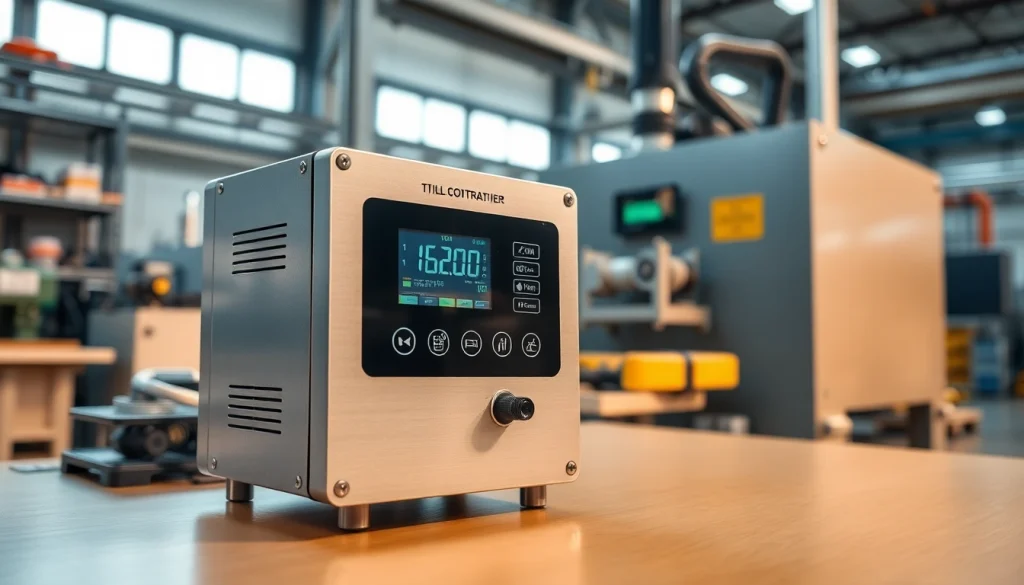
Introduction to Mould Temperature Controllers
Mould temperature controllers play a pivotal role in the manufacturing sector, particularly in processes like injection moulding, blow moulding, and die-casting. They are designed to maintain the optimal temperature of the moulds during production, ensuring that products are formed accurately and consistently. Understanding the significance of these devices is crucial for manufacturers looking to enhance their efficiency and product quality. A well-maintained Mould Temperature Controller can lead to better outcomes in virtually every aspect of production.
What is a Mould Temperature Controller?
A mould temperature controller is a specialized device used in manufacturing processes to regulate the temperature of moulds. They effectively transfer heat between the mould and the fluid medium, using either water or oil as a heat transfer fluid. By controlling the temperature, these devices help maintain a consistent and uniform temperature within the mould, which is essential for achieving the desired properties in the final product.
How Mould Temperature Controllers Work
The working principle of a mould temperature controller involves circulating a heated or cooled fluid through the mould. Typically, the system consists of a temperature control unit, a fluid reservoir, and a pump. The temperature control unit monitors and regulates the temperature of the fluid, which is then circulated through the mould via the pump.
When the mould requires heating, the fluid is heated to a pre-defined temperature set by the operator. Conversely, if cooling is necessary, the unit can chill the fluid to lower the temperature within the mould. This continuous cycle of heating and cooling is vital for the manufacturing process, as it affects the viscosity of materials used, their molding characteristics, and, ultimately, the quality of the finished product.
Benefits of Using Mould Temperature Controllers
Mould temperature controllers offer a myriad of benefits that can have significant positive impacts on manufacturing processes. These include:
- Improved product quality: Consistent temperature control leads to uniformity in material properties, resulting in a higher quality end product.
- Enhanced production efficiency: By maintaining optimal temperatures, these controllers help reduce cycle times, increasing throughput.
- Lower defect rates: Proper temperature control minimizes defects such as warping or incomplete filling of the mould.
- Energy savings: Automated temperature control can lead to more efficient energy use, decreasing operational costs.
Importance of Temperature Control in Manufacturing
Impact on Product Quality
The quality of manufactured products is highly dependent on temperature control during the moulding process. Temperature variations can lead to inconsistencies in material properties, affecting the strength, durability, and overall appearance of the product. In industries such as automotive and aerospace, where product integrity is paramount, rigorous temperature control is essential to comply with industry standards and regulations. Even minor defects due to temperature fluctuations can result in catastrophic failures, leading to recalls and significant financial losses.
Reducing Energy Costs
Energy costs are a major expense in manufacturing. Mould temperature controllers can significantly reduce energy consumption by ensuring that heating and cooling systems operate efficiently. By adjusting the temperature precisely and maintaining it within the required range, manufacturers can minimize the energy used for heating and cooling, translating to lower operational costs. Furthermore, advancements in technology have led to more energy-efficient designs, allowing for enhanced performance without incurring additional energy costs.
Enhancing Production Efficiency
Efficient production processes are characterized by reduced downtimes and maximized output. Mould temperature controllers play a key role in enhancing production efficiency by minimizing cycle times and enabling quicker product turnover. When the temperature is controlled effectively, the material solidifies and sets faster, allowing for quicker mould releases and reduced idle time. This optimized workflow leads to increased productivity and better resource utilization.
Choosing the Right Mould Temperature Controller
Key Features to Consider
When selecting a mould temperature controller, several essential features should be taken into account, including:
- Temperature range: Ensure that the controller can operate within the temperature range required for your specific application.
- Control precision: Look for devices that provide accurate temperature readings and adjustments to maintain consistency throughout the manufacturing process.
- Flow rate capacity: Assess the flow rate of the heating/cooling fluid to ensure it meets the demands of your moulding process.
- Energy efficiency: Choose units designed for low energy consumption to help reduce overall costs.
- User-friendly interface: An intuitive control system can make it easier for operators to manage temperature settings accurately.
Types of Mould Temperature Controllers
Mould temperature controllers can be categorized into several types based on their operation and design:
- Water-based controllers: Typically used in applications requiring low-temperature control, water-based systems are efficient and cost-effective.
- Oil-based controllers: Ideal for high-temperature applications, oil-based systems provide better heat transfer properties and can reach higher temperatures than water systems.
- Electric controllers: These systems utilize electric heating elements to maintain temperature and are usually used in smaller applications or processes that require precise control.
Cost vs. Benefit Analysis
The acquisition of mould temperature controllers represents an investment, and a detailed cost-benefit analysis can help manufacturers understand their value. Initial costs should be weighed against potential savings from improved product quality, reduced energy consumption, and enhanced productivity. By evaluating the expected return on investment (ROI) through increased efficiencies and decreased defect rates, manufacturers can make informed decisions that align with their financial and operational goals.
Best Practices for Implementing Mould Temperature Controllers
Installation Guidelines
Proper installation of mould temperature controllers is critical for optimized performance. Follow these guidelines to ensure effective setup:
- Identify the appropriate location for installation, considering accessibility for maintenance and service.
- Ensure that all connections, including those for heating and cooling fluids, are secure and leak-free.
- Calibrate the system after installation to verify that it operates within the required temperature ranges.
Regular Maintenance Tips
Regular maintenance is essential to keep mould temperature controllers functioning optimally. Recommended practices include:
- Routine inspection of fluid levels and top-up as needed.
- Regular cleaning of filters and heat exchangers to prevent buildup that impairs efficiency.
- Periodic calibration of temperature sensors to ensure accurate readings.
- Checking for leaks and ensuring that all connections are tight.
Common Troubleshooting Techniques
Even with proper maintenance, challenges can arise during operation. Understanding common issues and their solutions can save time and prevent production halts:
- Low temperature readings: Check for sensor malfunctions or improper fluid levels. Flush the system if necessary.
- Fluctuating temperatures: Inspect for blockages in the flow paths and ensure that the heating/cooling components are functioning correctly.
- Inadequate heating/cooling: Evaluate the heat transfer medium for optimal properties. Adjust the pump flow rate if needed.
Future Trends in Mould Temperature Control Technology
Innovations in Temperature Monitoring
The landscape of mould temperature control technology is constantly evolving, with innovations aimed at improving efficiency, accuracy, and ease of use. Developments such as real-time temperature monitoring systems and predictive analytics are leading the charge. These technologies enable manufacturers to forecast temperature variations and proactively adjust settings, ensuring optimal performance and minimizing downtime.
Integration with Smart Manufacturing
As the industry moves toward smart manufacturing, mould temperature controllers are being integrated with IoT (Internet of Things) technologies. This integration allows for enhanced data collection and analytics, leading to improved decision-making and more streamlined operations. Data generated from temperature controllers can be analyzed to predict maintenance needs, thereby preventing unexpected system failures and optimizing overall equipment effectiveness (OEE).
Predicted Market Changes
The mould temperature controller market is expected to undergo significant changes in the coming years, driven by advancements in technology and increasing demand for energy-efficient systems. Manufacturers are emphasizing the need for controllers that not only perform well but also offer smart capabilities. This shift may lead to a consolidation of market players, as those who can innovate and adapt to changing market demands will likely gain competitive advantages.